MS Bike Tour 2013 THANK YOU!!!
Jun 13th
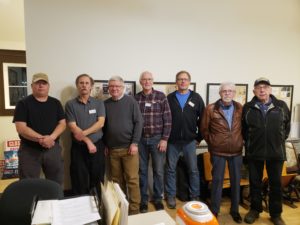
I would like to forward the following message from the MS Society and express my gratitude for all the amazing volunteers we had during this wonderful event. Another successful ride! Fantastic job everyone.
Karen…….can I just say that all your radio operators are an awesome group and they did an amazing job!
While I personally really only connected directly with Jeff at the base at Festival Hall, they were all so professional. Jeff did an excellent job keeping everyone ‘directed’ both days…..if that’s the right word.
On Day 2, he gave me his cell # for while I was out cruizing the route. That was SOOOO helpful and he got the messages out immediately to where they needed to be……….everything from the location of the first rider, to ‘will one of the trucks please pick up the bike with #___ leaning on the mailbox at Checkpoint #4″ [she was so surprised to see her bike already back at the Finish Line just shortly after she arrived!]
Day 2 turned out to be an especially difficult and long ride…..our support vehicles were right on top of the situations as they came up, thanks to the excellent communications team.
We honestly would not want to do this tour without the ham radio group! A VERY BIG THANK YOU to all of your team!!!
Ellen
Scouts Canada is looking for Ham volunteers
May 28th
Message:
Scouts Canada is looking for volunteers to help with the Amateur radio
station at the Canadian Scout Jamboree being held at Camp Woods,
Sylvan Lake Ab. from July 6 to 13, 2013
Please Contact: Chris Carr VE7BAC (604-836-7151)
chriscarr@shaw.ca
Boston Marathon 2013 – Bombs, Carnage and Amateur Radio Operators
May 2nd
http://w3atb.com/66-boston-marathon-2013-bombs-carnage-and-amateur-radio-operators
Glacier Waterton Hamfest
Mar 7th
Hamfest Time!!!
Registration is open! Available here is the 2013 registration. Hope to see you there!!
www.gwhamfest.org
George Forsyth AA7GS
212 Skyline Drive N.E. (Home)
Great Falls, Montana 59404 aa7gs@arrl.net
George Forsyth (work)
207 2nd Ave So. (shipping)
Great Falls, Montana 59405
george@securemontana.com
FEMA training: http://training.fema.gov/IS/crslist.asp
Montana’s Ham Radio Forum: www.w7eca.net/forum
Director: Glacier Waterton International Hamfest
Member: North Central Montana Auxiliary Communications Group
ICS 100-200-230-250-288-700-702-800-802-813-907-ARECC-CERT-FEMA AUX COMM-FEMA COML-
North Central Montana Auxiliary Communications Group Net:
AE7OC 7PM Thursdays 146.740 (N7YO) Echolink 37656 IRLP NODE #7908 (147.300)
Contact ISS
Feb 19th
All visible passes over the next five days starting Feb.19, 2013 of the ISS for us are at about 54deg N and occur between 6:30PM and 8:30PM.
Rx on 145.800 and Tx on 144.490
Basic Amateur Radio Course
Jan 21st
There is a basic amateur radio class being offered March 23 and 30.
Preclass study material available at http://www.ic.gc.ca/eic/site/smt-gst.nsf/eng/sf01900.html and http://www.ic.gc.ca/eic/site/smt-gst.nsf/eng/h_sf05378.html .
To register and prepay required preregistration fee of $10 via email transfer, send to Garry ve6cia at gmail.com.
Raffle tickets 2013
Jan 4th
Raffle tickets are available for members to sell. Please call me to make arrangements to pick up your books. 403-318-8320
Karen, VA6LDY
Volunteers provide key emergency communications
Dec 18th
Volunteers provide key emergency communications
EMERGENCY COMMUNICATIONS: Russell Storry, emergency radio coordinator, recently participated in a practice session during which an email was sent and received using ham radios and netbook computers.
Equipment allows emails to be sent using ham radios and battery-powered computers
by Laura Walz | editor@prpeak.com
Published: Wednesday, December 12, 2012 11:21 AM PST
Ham radio operators in Powell River are a key part of the region’s emergency response system. Members of Powell River Amateur Repeater Society and Powell River Amateur Radio Club volunteer to be part of the emergency radio communication unit, which comes under the umbrella of Powell River Regional Emergency Program (PRREP).
A major disaster on the West Coast would have the potential to knock out communications, including telephone and Internet service. The unit would activate equipment kept in an emergency communications trailer, which can be set up wherever an Emergency Operations Centre (EOC) would be established. Both the Powell River Regional District and City of Powell River have contributed funds for equipment, as well as a grant from BC Gaming.
The emergency radio communications group, which has 10 regular members, is part of Emergency Management BC (EMBC), said Russell Storry, emergency radio coordinator. “We have identify cards and coverage through WorkSafeBC for a tasked event,” he explained. “We complement Emergency Social Services [ESS] and ground search and rescue.”
The trailer is equipped with generators and fuel, Storry explained. “Our task is to pass messages. We provide backup communications in the event that telephones and Internet are not available.”
The group recently added a system which enables them to send digital messages within the region and also to Victoria, using a combination of amateur radios and other equipment. The system allows an EOC in Powell River to have outside communications and both send and receive messages.
Digital messages can be sent between two ham radios connected to netbooks or laptop computers that can run off batteries, explained Derek Poole, a radio operator with the unit. “With the software we’re using and that hardware, we can send text messages, emails back and forth,” he said.
Without the system, communications would be voice-to-voice over the radio, Poole said, or actually picking the message up physically and delivering it. “The problem with a real large-scale event can sometimes be the radios can really get tied up with the urgency of the communications,” he said. “This uses a different system, a different set of frequencies and it’s very fast. When you send a message with this method, once it’s all set up and you push the go button, it’s a matter of a few seconds and it passes the whole message. It doesn’t tie up the airways to any extent at all.”
Currently, the system works radio-to-radio directly, so it is restricted by distance. The plan is to install a digital repeater on Texada Island, which would allow the group to work in more isolated areas, Poole said.
While the system is somewhat slower than normal Internet service, it is possible to send small attachments, Poole said. “For example, if you had specific, written instructions that you had to pass on, the commander or whoever was in charge could sign that off and send it off signed to another location,” he said. “They could receive it and it could be an official document as part of whatever exercise you are involved in.”
Poole said he was excited about the new capabilities, which he said has applications for search and rescue as well. “If we were in the backcountry and there were poor communications back into the front, we could do equipment requests or resource requests using this system.”
The group is looking for more members, said Storry. “The issue for us would be if we had an event, to provide volunteers on a continuous basis around the clock for a number of locations takes a lot of people.”
People interested in volunteering don’t have to have their own ham radios, but most do. People do need an amateur radio licence to use amateur radio bands, Storry explained, and computer skills are helpful.
Members of the society assist newcomers with learning how to become an EMBC registered radio communications volunteer. The society meets on the first Saturday of the month from September to June at the Cranberry Training Centre.
Interested readers can find more information by following the PRREP links on the regional district’s website.